


13 Oct Emotional Regulation Support in Nottingham: When You’re Coping, But Not Really OK
Exploring Emotional Regulation Support in Nottingham, I spent a day last week at David Lloyd’s West Bridgford talking to their staff and members about The Ivy Retreat, emotional regulation, neurodiversity and the different ways we cope when life becomes overwhelming.
The problem, in my opinion, is that so many people are literally just treading water to survive, instead of thriving and really enjoying a slower more joyful, peaceful balance in life. One where productivity, joy, efficiency and functionality are enhanced by slowing down and taking pressure off, rather than piling it on.
What struck me was how different everyone’s circumstances were anxiety, neurodivergence, parenting teenagers, difficult relationships, stress, burnout and simply needing somewhere to stop for a while, yet the underlying need was often so similar.
We need places where we don’t have to perform being OK.
Emotional regulation isn’t about learning to suppress difficult feelings or forcing ourselves to “calm down”. It’s about understanding what is happening within us, recognising what our nervous system needs, and developing ways to move through difficult emotions rather than becoming consumed by them. I help people access the tools they need to build emotional resilience, so that when life throws us curve balls we bounce back quicker.
What does emotional dysregulation look like and what are some of the ways it shows up?
- Overthinking
- Shutting down
- Snapping/shouting/rage
- Crying uncontrollably
- Avoidance
- Procrastination
- Panic
- People pleasing
- Rejection sensitivity
- Masking
- Needing to escape
- Struggling after school/work/social interactions etc
- Sensitivity to tiredness, light, noise and other sensory imputs
- Excessive lethargy and need for sleep
- Chronic work/exercise
- Doom scrolling
Not all dysregulation looks like an obvious meltdown. Sometimes it looks remarkably like coping, and sadly society rewards us for self neglect, which further encourages people to keep in a cycle of running themselves down.
You might still be getting everyone to school, going to work, answering emails, exercising and doing everything expected of you, while internally feeling as though you’re holding everything together by a thread.
When anxiety is actually overwhelm
Anxiety isn’t always a racing heart or a panic attack.
Sometimes it looks like irritability, exhaustion, procrastination, overthinking, needing to control things, becoming unable to make decisions or feeling completely paralysed by something that appears relatively simple.
When our nervous system is already carrying too much, another demand, an email, an unexpected change of plan, a difficult conversation, a noisy room or even deciding what to cook for dinner, can become the thing that tips us over the edge.
And then we often make it worse by criticising ourselves:
Why can’t I just get on with it?
Why am I reacting like this?
Everyone else seems to manage.
Instead of immediately asking yourself “How do I make myself cope with this?”, try asking:
- What is making this feel overwhelming?
- What can I remove or reduce right now?
- Do I need movement, quiet, rest, connection or space?
- Am I hungry, tired, overstimulated or emotionally depleted?
- What is the smallest next step I can take?
Regulation doesn’t always mean making yourself calm, it often is an invitation to accept feelings without judgement and to process them to work through them to reach a sense of feeling grounded and calm .
Regulation means recognising that your system has had enough and responding to that information rather than fighting against it.
Why neurodivergent teenagers may need a different approach
This is something I feel particularly passionate about.
For autistic and ADHD teenagers, the world can involve a huge amount of processing that we don’t necessarily see.
Sensory overload, demands, school pressure, social expectations, rejection sensitivity, transitions, executive functioning difficulties and constantly trying to work out what other people expect can all take their toll.
A teenager may mask throughout the school day and appear to be coping, only to come home and completely fall apart.
The temptation as adults can be to immediately try to fix the behaviour.
But behaviour is communication.
Before asking “How do we stop this?”, it can be much more useful to ask:
“What is happening underneath this?”
A young person who is shouting, refusing, withdrawing or becoming distressed may not need another consequence or lecture. They may need reduced demands, sensory relief, time to process, autonomy, reassurance or simply someone who can sit alongside them without immediately trying to change how they feel.
One of the simplest questions we can ask is:
“Do you want me to listen, or would you like help finding a solution?”
Giving someone space to understand their own needs is part of helping them develop the tools to regulate themselves. Reducing societal expectations to answer questions, engage in small talk, ‘be polite’ can hugely help a struggling teen to regulate quickly and efficiently.
When home or relationships don’t feel emotionally safe
Our ability to regulate is also affected by the environments and relationships around us.
If you’re living with conflict, criticism, unpredictability, controlling behaviour or constantly feeling as though you’re walking on eggshells, your nervous system can remain on alert even when there is no immediate crisis.
You may find yourself monitoring someone else’s mood, changing your behaviour to prevent conflict, people pleasing, questioning your own feelings or feeling unable to fully relax.
Over time, living in that state can be exhausting.
Emotional regulation can help us reconnect with what we’re feeling, recognise our own needs and develop boundaries, but it is important that regulation isn’t used to teach someone to simply tolerate an unsafe situation.
If you are experiencing domestic abuse, coercive control or feel unsafe within a relationship, specialist domestic abuse organisations can provide practical advice, advocacy and support alongside therapeutic help.
Sometimes healing begins with being able to recognise:
“This doesn’t feel OK for me.”
A few things you can try when the wave hits
You don’t need twenty new coping strategies. Start with one or two that feel achievable.
Name what is happening.
Try replacing “I’m being ridiculous” with “I’m overwhelmed”, “I’m overstimulated” or “I’m feeling rejected.”
Reduce the input.
Dim the lights. Step outside. Put your phone away. Find somewhere quieter. Remove one unnecessary demand.
Move your body.
Walk, stretch, shake out your hands, dance, breathe, cry or use EFT tapping. We don’t have to think our way out of every feeling.
Get curious instead of critical.
Ask “What do I need?” rather than “What’s wrong with me?”
Make the next step tiny.
You don’t need to solve everything today. What would make the next ten minutes easier?
And remember, you don’t have to get from a 10/10 overwhelmed to completely calm.
Sometimes getting from a 10 to an 8 is enough.
Why I created The Ivy Solo Retreat
Sometimes talking across a desk isn’t what someone needs.
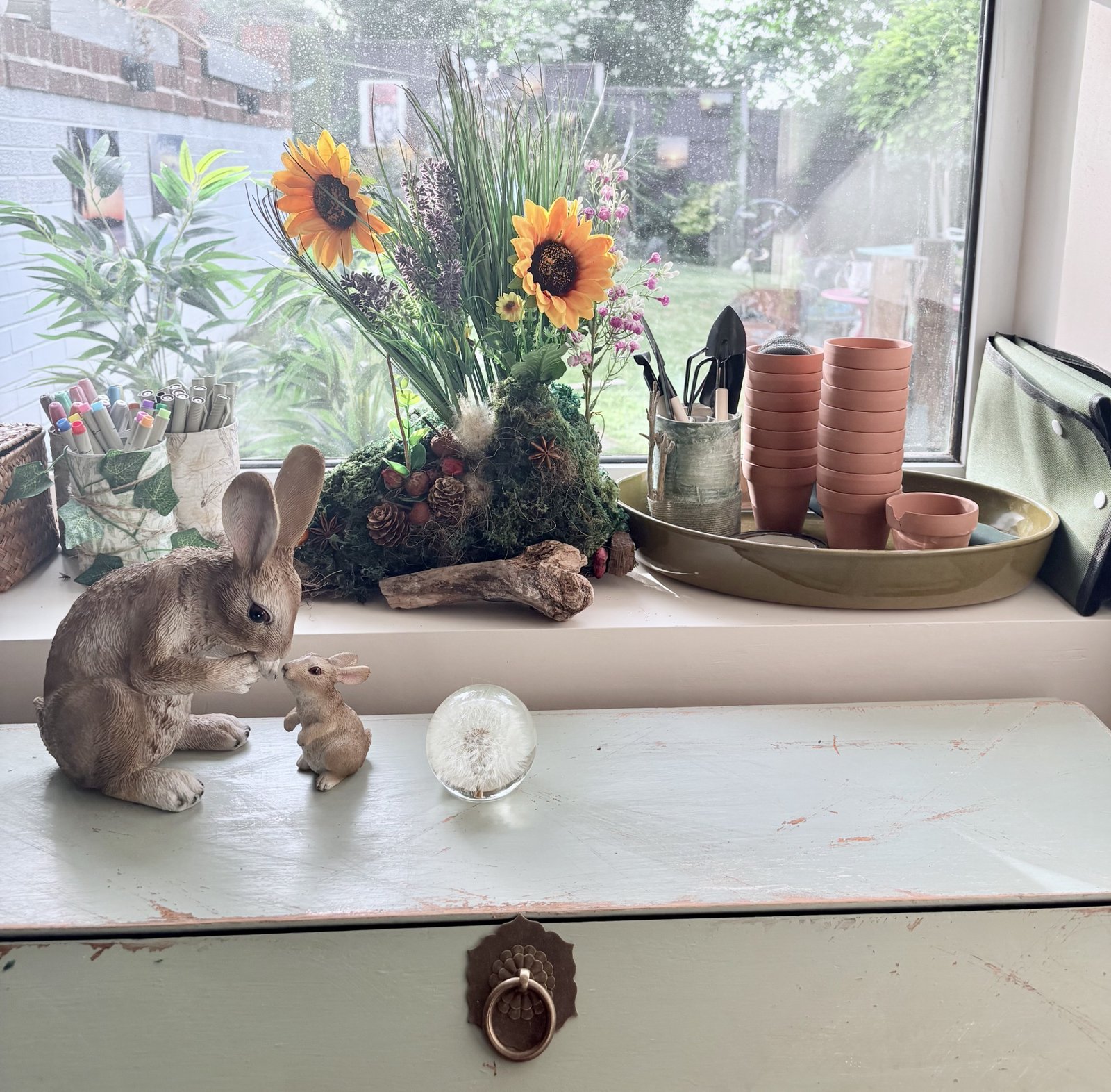
The Ivy gives us another option- a private, quiet space where we can talk, create, journal, use EFT, practise regulation techniques, sit outside, make something with our hands or simply have less pressure to “do therapy properly”.
I wanted to create a space where stopping and pausing is encouraged.
Some people talk more easily while their hands are occupied, others need movement. While some need quiet, others need creativity. Sometimes we explore what’s happening through EFT or hypnosis, and sometimes someone simply needs space away from everyday demands long enough to hear themselves think.
The Ivy isn’t about escaping life indefinitely. The Ivy is available for solo adults to book, for parents to book for teens, or for a parent and child aged 12 plus to use to reconnect. I’m not there unless I’m invited and pre-booked, so it can be a gentle way to introduce people to one to one support.
It’s about creating enough space to reconnect with yourself and explore what you might need when you step back into it.
You don’t have to wait until you’re in crisis to ask for support..
…nor do you have to reach breaking point before you’re “allowed” to need help. Whether you are overwhelmed by anxiety, navigating neurodivergence, supporting a teenager who is struggling, recovering from a difficult relationship, experiencing burnout, I’m here to help.
My role isn’t to tell you how you should feel or give you another list of things you should be doing.
I work with people to understand what is happening beneath the feelings and behaviours, and to help them access the tools they need to navigate those feelings differently.
That might include EFT, hypnotherapy, emotional regulation tools, coaching, creative approaches or simply having a safe space to explore what is happening without judgement.
We can’t control every wave that life sends our way.
But we can learn more about ourselves, recognise what we need and build a toolkit that helps us ride the waves rather than continually feeling pulled under by them.
Emotional regulation support in Nottingham and online
I offer one-to-one support in Nottingham and online, including sessions for adults, neurodivergent women, teenagers and parents, as well as therapeutic experiences at The Ivy.
If you’ve read this and recognised yourself, or someone you love you don’t need to work out exactly what type of support you need before getting in touch.
Request a call with me here and let’s have a chat.
Tell me what’s happening, what you’re struggling with and what you’d like to feel different.
We can talk about where you are now, what support might look like for you and how I can help you access the tools you need to understand yourself, regulate your emotions and ride the waves.
Remember you don’t have to wait until you’re in crisis to start supporting yourself.
More content on stress management here: Blog post